
Risk and Compliance Checklist: Investment opportunities, potential, and economic stability of Indonesia
Risk and Compliance Checklist regarding investment opportunities, potential, and economic stability of Indonesia for business decisions of Indonesia-China members.
Summary
Risk and Compliance Checklist: Investment opportunities, potential, and economic stability of Indonesia is one of the 2026 developments relevant to Indonesia-China business relations. At WEF 2026, the government highlighted investment openness, economic potential, and Indonesia’s stability as the foundation for long-term partnerships. This article takes the angle of examining regulatory, contract, payment, quality, logistics risks, and dependence on a single partner or route. The goal is not to repeat press releases, but to translate official information into business questions that can be tested by exporters, importers, investors, SMEs, service providers, and education partners.
This news is compiled by the ICBC association editorial team from primary sources listed at the end. Mention of programs, agencies, companies, or forums does not mean ICBC is the organizer or a directly involved party. Members still need to check the latest official documents, technical requirements, partner eligibility, and policy changes before making commercial decisions.
Context
BKPM’s publication - Investment Opportunities in Indonesia at WEF 2026 dated 2026-01-22 discusses investment opportunities, potential, and economic stability of Indonesia. That information should be read in the 2026 context: Indonesia-China economic relations do not move only through goods trade, but also through investment, industrial connectivity, digital payments, skills upgrading, green economy, and regional supply chain integration. Because each sector has different cycles, macro figures or cooperation commitments do not automatically become a transaction for a company.
For the Regulation category, key checkpoints include legal basis, effective date, document obligations, contract clauses, taxation, and transaction completion procedures. Companies need to distinguish early indicators, such as policy announcements or investment interest, from execution indicators, such as contracts, effective permits, sample testing, delivery schedules, payments, and commercial operations. This separation helps management determine whether an opportunity is still at monitoring, exploration, validation, negotiation, or ready to enter the sales and investment pipeline.
The bilateral context also demands consistency of communication across languages and organizations. Company profiles, specifications, certificates, pricing structures, capacity, and signing authority must convey the same information in Indonesian, English, or Mandarin versions. Small differences in numbers and terms can slow due diligence, cause misunderstandings about scope, or reduce trust of potential partners.
Relevance for Indonesia-China business actors
From a risk and compliance checklist perspective, the main relevance is to examine regulatory, contract, payment, quality, logistics risks, and dependence on a single partner or route. Companies should link this news to internal data: products or projects that are truly ready, remaining available capacity, operating regions, funding needs, logistics costs, list of potential partners, and risks that lack mitigation. That way, the news becomes input for decisions rather than mere promotional material.
Good follow-up starts with measurable hypotheses. Exporters can test product and price fit against specific buyers; importers can compare specifications, total landed cost, and supply resilience; investors can assess permits, site readiness, offtakers, technology, and shareholder structure; while service providers can offer support that directly closes document, logistics, payment, labor, or market access gaps.
Before business meetings, parties offering opportunities should prepare a one-page summary, supporting data, a list of questions, and negotiation boundaries. After the meeting, each item should be recorded as a decision, assumption, data request, follow-up owner, and target date. This simple discipline is important because cross-border opportunities often involve many parties and can stall when there is no clear responsible person.
Companies also need to be cautious about claims of transaction value or investment commitments. Values announced by official sources provide a measure of potential, but disbursement, realization, and commercial benefits depend on the project stage. Legal, technical, financial, environmental, and reputational validation remain necessary. If using public information in a proposal, cite the source and date so potential partners can check the original context.
Notes for ICBC members
Practical steps recommended for members are to conduct due diligence, check product classification and licensing, and prepare alternative scenarios before making commitments. The secretariat can group member responses by role—buyer, seller, investor, project owner, logistics provider, consultant, educational institution, or technology provider—so introduction requests are not too general and can be processed with clear criteria.
To maintain pipeline quality, each opportunity should have a status, latest evidence, potential value, readiness level, main risks, and next review date. Opportunities without new data can remain on the watchlist, while opportunities that have specific needs and responsible parties can be elevated to the business matching agenda. ICBC remains an association and network facilitator; transaction decisions and due diligence are the responsibility of each party.
Sources
- BKPM - Investment Opportunities in Indonesia at WEF 2026
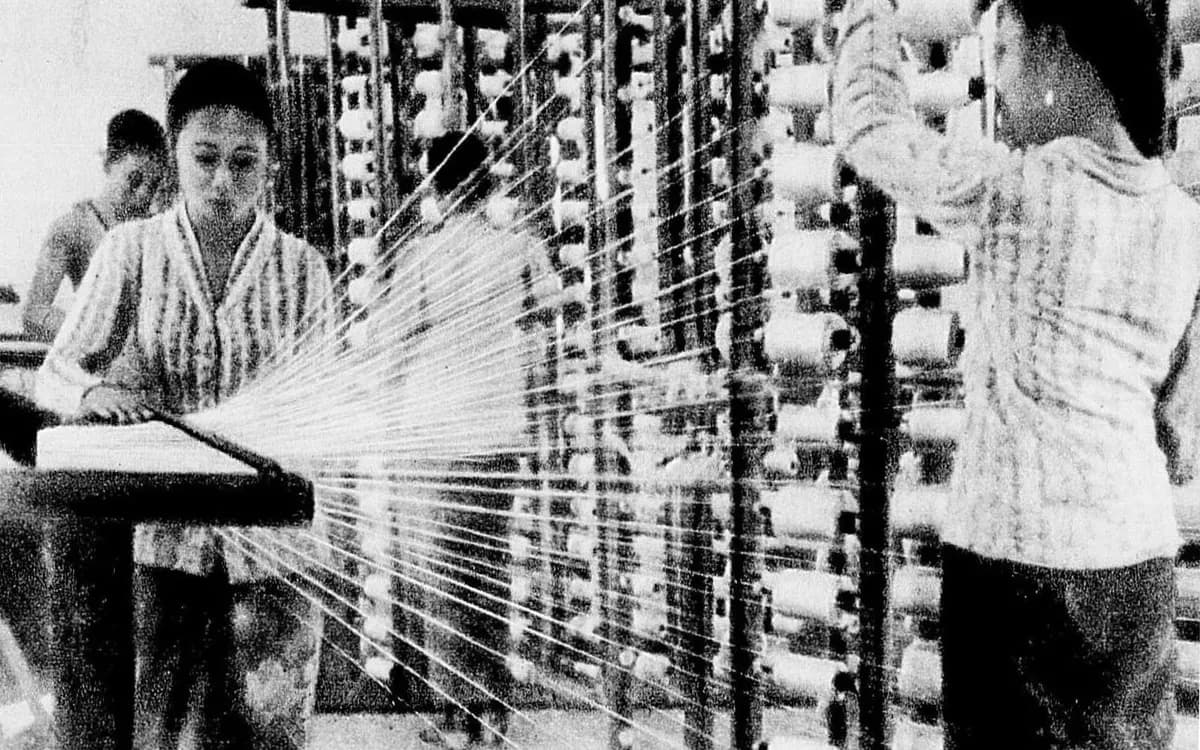
- Wikimedia Commons image - Wikimedia Commons, Unknown author Unknown author, Public domain, Thread factory in Java 2, Djawa Baroe, Vol. 1, Iss. 3 (1943 02 01), p19.
Related articles
Latest articles
Strategic content is prioritized so the website shows benefits and insights, not only activity reports.
Member Collaboration Opportunity: Indonesia Exports and Imports May 2026
Member Collaboration Opportunity on Indonesia’s exports and imports in May 2026 for business decisions by Indonesia-China members.
Business Execution Agenda: Global Investor Confidence and the Composition of Indonesia's PMA
The Business Execution Agenda concerning global investor confidence and the composition of Indonesia's PMA for business decisions of Indonesia-China members.

Executive Agenda: Implementation of China QRIS and Strengthening Local Currency Transactions
Executive Business Agenda regarding the implementation of China QRIS and strengthening local currency transactions for business decisions of Indonesia-China member.