
SOURCE TITLE: Market Signal 2026: AI collaboration, smart farming, and education with Guangxi
SOURCE EXCERPT: Market Signal 2026 on AI collaboration, smart farming, and education with Guangxi for business decisions of Indonesia-China members.
Summary
Market Signal 2026: AI collaboration, smart farming, and education with Guangxi is one of the 2026 developments relevant to Indonesia-China business relations. The Indonesian Embassy in Beijing (KBRI Beijing) is exploring collaboration in AI, smart farming, education, trade, and investment with partners in Guangxi. This article takes a reading of changes in demand, Indonesia’s position, and indicators that should be compared with company sales data. The aim is not to repeat a press release but to translate official information into business questions that exporters, importers, investors, SMEs, service providers, and education partners can test.
This news is prepared by the ICBC association’s editorial team from primary sources listed at the end. Mentioning a program, agency, company, or forum does not imply ICBC is the organizer or directly involved. Members should still check the latest official documents, technical requirements, eligibility of potential partners, and policy changes before making commercial decisions.
Context
The Beijing Embassy publication - AI and Smart Agriculture Guangxi Cooperation dated 2026-03-13 discusses AI collaboration, smart farming, and education with Guangxi. This information should be read in the context of 2026: Indonesia-China economic relations are not limited to trade in goods but also include investment, industrial connectivity, digital payments, skills enhancement, green economy, and regional supply chain integration. Since each sector has a different cycle, macro figures or cooperation commitments do not automatically translate into transactions for a company.
For the Digital category, key checkpoints include system integration, data security, reconciliation, exchange rate risk, user experience, and handling of transaction failures. Companies should distinguish early indicators, such as policy announcements or investment interest, from execution indicators, such as contracts, effective permits, pilot testing, delivery schedules, payments, and commercial operations. This separation helps management determine whether an opportunity remains under monitoring, exploratory, validation, negotiation, or ready to enter the sales and investment pipeline.
The bilateral context also requires consistency in cross-language and cross-organization communication. Company profiles, specifications, certificates, pricing structures, capacity, and signing authority should convey the same information in Indonesian, English, or Mandarin. Small differences in numbers and terms can slow due diligence, lead to misinterpretation of scope, or erode trust among potential partners.
Relevance for Indonesian-Chinese enterprises
From the Market Signal 2026 perspective, the main relevance is reading changes in demand, Indonesia’s position, and indicators to compare with company data. Companies should link this news to internal data: products or projects that are truly ready, remaining capacity, operating regions, funding needs, logistics costs, list of potential partners, and risks that lack mitigations. This makes the news input for decisions rather than just promotional material.
A good follow-up starts with an measurable hypothesis. Exporters can test product and price fit against specific buyers; importers can compare specifications, total landed costs, and supply resilience; investors can assess permits, site readiness, offtake, technology, and ownership structures; while service providers can offer support that directly removes documentation, logistics, payments, labor, or market access barriers.
Before a business meeting, the opportunity presenter should prepare a one-page summary, supporting data, a list of questions, and negotiation boundaries. After the meeting, each item should be recorded as a decision, assumption, data request, owner, and target date. This simple discipline is important because cross-border opportunities often involve many parties and can stall without a clear owner.
Companies should also exercise caution regarding claims of transaction value or investment commitments. The value announced by official sources provides a scale of potential, but realization, disbursement, and commercial benefits depend on project stages. Legal, technical, financial, environmental, and reputational due diligence remains necessary. If using public information in proposals, cite sources and dates so potential partners can verify the original context.
Notes for ICBC Members
A practical step recommended for members is to create a concise dashboard showing volume, price, destination country, prospective buyers, and monthly verifications. The Secretariat can group member responses by role—buyer, seller, investor, project owner, logistics provider, consultant, educational institution, or technology provider—so that introduction requests are not too generic and can be processed with clear criteria.
To maintain pipeline quality, each opportunity should have a status, most recent evidence, potential value, readiness level, main risk, and next review date. Opportunities without new data can remain on a watchlist, while opportunities with specific needs and a responsible party can be advanced to a business-matching agenda. ICBC remains a association and networking facilitator; transaction decisions and due diligence remain the responsibility of each party.
Sources
- Beijing Embassy - AI and Smart Agriculture Cooperation Guangxi
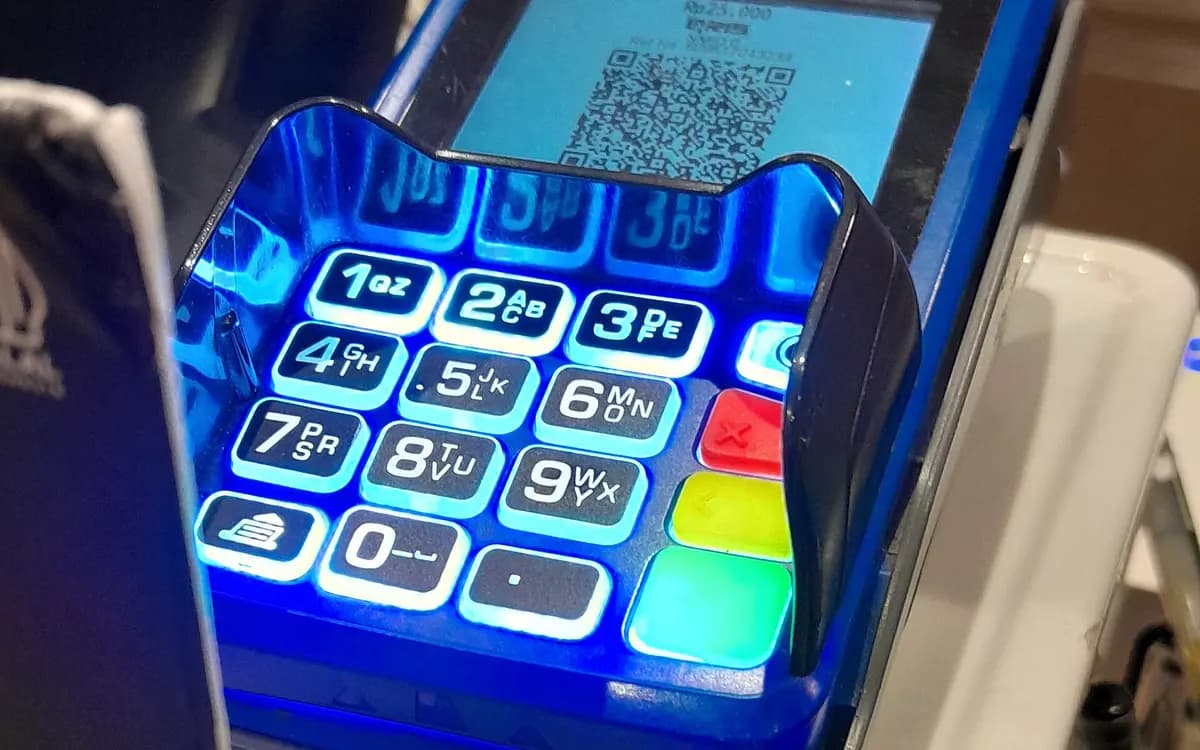
- Wikimedia Commons Image - Wikimedia Commons, VulcanSphere, CC BY 4.0, Ingenico Move 2500 payment terminal showing QRIS QR code for payment (2026 04 0....
Related articles
Latest articles
Strategic content is prioritized so the website shows benefits and insights, not only activity reports.

Checklist of Risk and Compliance: Collaboration of technology and future industries through BRICS 2026 forum
Checklist of Risk and Compliance on collaboration of technology and future industries through the BRICS 2026 forum for Indonesian-Chinese member business decisions.

Market Signals 2026: China’s QRIS implementation and strengthening local currency transactions
Market Signals 2026 regarding the implementation of China QRIS and the strengthening of local currency transactions for business decisions of Indonesia-China member.
Business Execution Agenda: Digitalization and Investment to Bring SMEs into the Chinese Supply Chain
Business Execution Agenda on digitalization and investment to bring SMEs into the Chinese supply chain for Indonesia-China members' business decisions.