
Cross-Border Payments and the Implications of the Conclusion of the CAFTA 3.0 Negotiations: market validation
The digital implications of the conclusion of the CAFTA 3.0 negotiations for Indonesia-China business actors.
Summary
Cross-Border Payments and the Implications of the Conclusion of the CAFTA 3.0 Negotiations: market validation highlights a development that is relevant to Indonesia-China business actors. MOFCOM stated that the CAFTA 3.0 negotiations cover new areas such as the digital economy, green economy, supply chains, and standardization. For companies, information like this is not enough to be read merely as macro news. Official data and agendas need to be translated into operational decisions: which products are worth offering, which partners need to be approached, which risks must be controlled, and which documents must be prepared before commercial discussions take place.
This summary is prepared as an ICBC editorial article based on official sources, not as a claim of ICBC’s presence at or direct involvement in the activity. The focus is to help members and prospective members read the business context in practical terms, especially as Indonesia-China trade, investment, payments, and supply chain relationships increasingly require orderly coordination.
Context
The official MOFCOM CAFTA 3.0 source dated 2025-05-09 provides an overview of the conclusion of the CAFTA 3.0 negotiations. In Indonesia-China business relations, this context is important because company decisions are often influenced by a combination of market demand, regional rules, production capacity, access to financing, and the readiness of local partners. Official information also helps distinguish opportunities that already have a policy basis from mere market rumors.
For the Digital category, business actors need to pay attention to settlement, transaction security, reconciliation, exchange-rate risk, and payment channel integration. Each indicator needs to be read together with the company’s internal data. For example, increased buyer interest does not automatically mean orders can be fulfilled if production capacity, certification, packaging, or shipping schedules are not yet ready. Conversely, changes in regulation or payment frameworks can open room for efficiency if the company already has the appropriate bank, documents, and reconciliation processes in place.
Another context that needs to be noted is the increasing need for cross-language and cross-cultural communication. Many opportunities fail to develop because technical documents are not yet consistent, company profiles are too general, or proposals do not address the specific needs of prospective partners. Therefore, official news needs to be turned into a simple worklist: what the opportunity is, who the relevant parties are, which documents are needed, when follow-up should happen, and which metrics are used to assess progress.
Relevance for Indonesia-China business actors
For exporters, importers, investors, and supporting service providers, this development is relevant because it provides direction on market priorities and working standards that are being formed. Article number 88 in this news dataset places the official source as a starting point for reading practical needs, not as the sole basis for decision-making. Companies still need to conduct independent verification of prices, technical regulations, tax obligations, permits, logistics schedules, and partner feasibility before making commercial commitments.
In practice, Indonesia-China opportunities usually proceed through several stages: exploration, initial data exchange, legal validation, sample testing or location studies, commercial negotiation, and then implementation monitoring. The most common mistake occurs when companies move straight into price negotiations without preparing technical information. To reduce risk, members can prepare a one-page summary containing the company profile, capacity, needs, constraints, and the questions they want prospective partners to answer.
Business actors also need to maintain a communication position that remains neutral and professional. When using sources from government, associations, or international institutions, companies should not turn them into claims of direct support unless there is an official document stating so. This stance is important for maintaining credibility, especially in cross-border negotiations involving public and private parties.
Notes for ICBC members
As an independent association, ICBC can use this development as material for mapping member needs. The recommended steps are to prepare transaction reconciliation, payment SOPs, operational limits, and mitigation scenarios in case exchange-rate differences or refunds occur. Each member who wants to follow up on similar opportunities should prepare concise company data, responsible contact details, and the status of document readiness before requesting an introduction or business matching.
For internal follow-up, articles like this can be placed on a monthly watchlist. The watchlist should include official sources, potential sectors, main risks, verification needs, and communication agendas. In this way, news becomes not only an archive, but also a working tool that helps members make more disciplined decisions.
Sources
- MOFCOM CAFTA 3.0
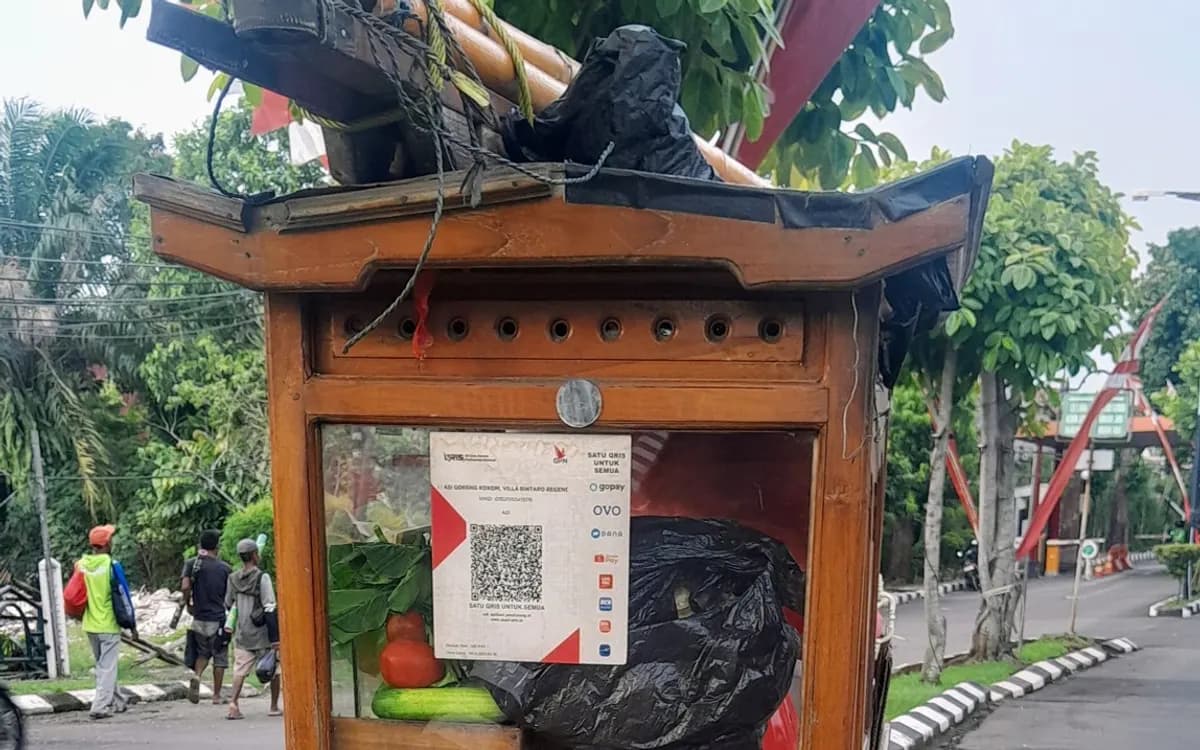
- Wikimedia Commons image - Wikimedia Commons, VulcanSphere, CC BY 4.0, Food cart with QRIS on window.
Related articles
Latest articles
Strategic content is prioritized so the website shows benefits and insights, not only activity reports.

Checklist of Risk and Compliance: Collaboration of technology and future industries through BRICS 2026 forum
Checklist of Risk and Compliance on collaboration of technology and future industries through the BRICS 2026 forum for Indonesian-Chinese member business decisions.

Market Signals 2026: China’s QRIS implementation and strengthening local currency transactions
Market Signals 2026 regarding the implementation of China QRIS and the strengthening of local currency transactions for business decisions of Indonesia-China member.
Business Execution Agenda: Digitalization and Investment to Bring SMEs into the Chinese Supply Chain
Business Execution Agenda on digitalization and investment to bring SMEs into the Chinese supply chain for Indonesia-China members' business decisions.